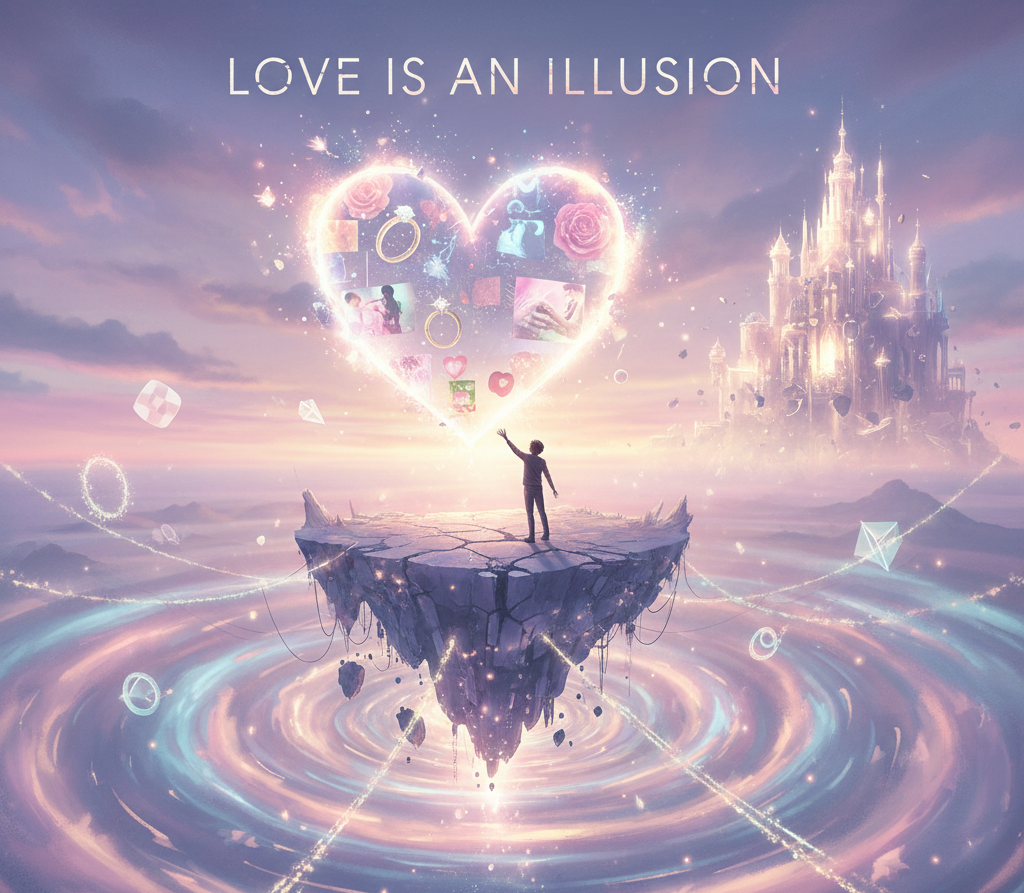
Have you ever wondered if that heady rush of new love—the racing heart, the constant thoughts, the butterflies—is genuine connection or simply your brain playing a masterful trick? The phrase “love is an illusion” captures both a profound scientific idea and a wildly popular fictional narrative. On one hand, psychologists and cognitive scientists argue that love may be a sophisticated cocktail of chemicals and cognitive biases. On the other, the BL/Omegaverse manhwa, Love is an Illusion!, takes the concept into a playful, romantic, and dramatic fictional universe. Let’s explore both dimensions.
The Scientific Argument: Why Love is a Cognitive Illusion
When we talk about love as a psychological or philosophical concept, it’s tempting to romanticize it—but modern science gives us a fascinatingly different picture.
Dopamine, Oxytocin, and the Chemical Cocktail
The rush of attraction is largely chemical. Dopamine, often called the “pleasure molecule,” spikes in early stages of infatuation, creating intense motivation to pursue someone. Oxytocin and vasopressin, the so-called “bonding hormones,” deepen emotional attachment. Evolutionary imperatives encourage pair bonding for survival and reproduction. From a cognitive standpoint, what feels like “true love” can often be an orchestrated chemical illusion—our brains are wired to make connections feel urgent and meaningful.
The Halo Effect and Perceptual Bias
Cognitive psychology explains another layer: the halo effect, where we subconsciously project ideal traits onto our partners, often overlooking flaws. This perceptual bias reinforces the illusion of perfect compatibility. Add in confirmation bias—seeking evidence that supports our attraction—and it’s clear why love feels magical yet can be fundamentally constructed by the mind. In short, the “truth” of love may be as much in perception as in reality.
Psychological reasons love is an illusion include all these factors: neurotransmitters, cognitive biases, and evolutionary drives, creating an experience that feels real but is partially manufactured by our brain.
The Manhwa Phenomenon: Love is an Illusion!
While science deconstructs love, fiction celebrates it—especially in the world of manhwa.
What is “Love is an Illusion! Manhwa”?
Love is an Illusion! is a popular BL/Omegaverse manhwa that has captured the hearts of readers worldwide. The Omegaverse genre introduces unique social and biological dynamics, often with Alpha, Beta, and Omega character roles, adding tension and drama to romance. In this manhwa, love isn’t just an emotional journey—it’s a narrative playground where misunderstandings, chemistry, and societal expectations collide. Its popularity lies in witty storytelling, emotionally charged relationships, and playful subversion of romantic tropes.
Key Characters and Central Conflict
The story revolves around its main characters, whose initial encounters are marked by deception, attraction, and complicated misunderstandings. Their dynamic is a dance of ego, desire, and slowly realized vulnerability—a perfect fictional illustration of why love can feel like an illusion. Fans often debate character choices, emotional arcs, and plot twists, adding to the series’ cultural footprint. Understanding these love is an illusion characters provides a bridge between fantasy and our own reflections on attraction, chemistry, and emotional attachment.
FAQ
Q: Is love necessary for human survival?
Evolutionarily, pair bonding and social connection promote survival and reproductive success, even if romantic love itself is partially illusory.
Q: Where can I read Love is an Illusion! Chapter 1?
Licensed platforms like Tappytoon or official publishers provide legal access to the first chapter and full series.
Q: What is the Omegaverse genre?
A subgenre of BL romance featuring hierarchical biological roles (Alpha, Beta, Omega), often exploring power dynamics, mating instincts, and emotional bonds.
Q: Is all romantic love an illusion?
Not entirely—but many elements, including attraction and idealization, are shaped by chemical compounds and cognitive biases, making parts of love feel illusory.
Q: Can understanding the science behind love enhance my relationships?
Absolutely. Awareness of biases, neurochemistry, and attachment patterns can improve emotional intelligence and relational communication.
The Takeaway
Whether through the lens of cognitive psychology or the pages of a BL manhwa, the notion that love is an illusion illuminates the intricate, sometimes contradictory ways we experience connection. Chemicals, biases, and evolutionary drives may shape what we feel, while fictional narratives allow us to explore desire, misunderstanding, and emotional growth safely. The power of love—real, perceived, or imagined—remains one of humanity’s most compelling experiences.
Whether you analyze it scientifically or follow the twists of Love is an Illusion!, the illusion itself teaches us something about desire, attachment, and the magic of human connection. Which interpretation captivates you more?